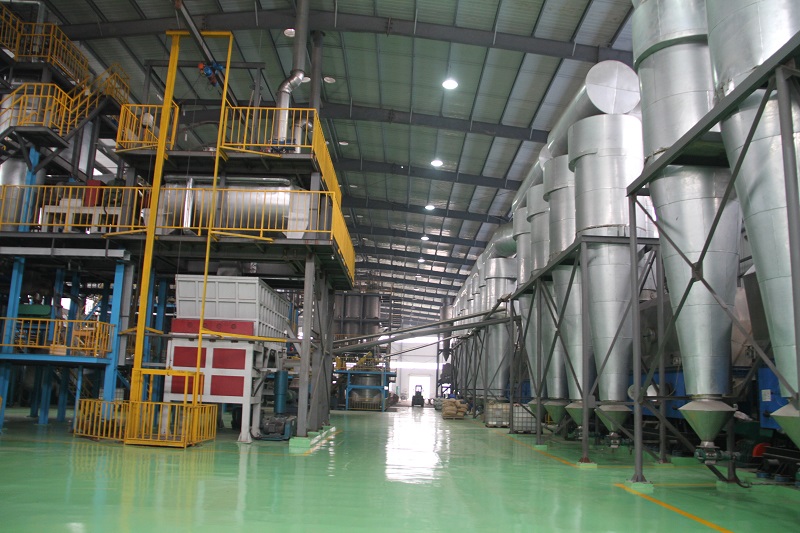
Overview
In organic chemistry, certain giant molecules — starch, rubber, plastic, resin, synthetic fibres, cellulose, proteins — are called polymers. Plants manufacturing them are polymer plants. A rubber facility, synthetic yarn unit (nylon, terylene), plastic, resin or silicon factory, or a starch manufacturing facility can all be classified as polymer plants.
Polymer molecules are built up of smaller monomer units joined together in a repeating structure. The recurring unit is the monomer; the assembled molecule is the polymer. Rubber is a polymer of isoprene, starch of α-glucose, cellulose of β-glucose.
Three Polymerisation Routes
1. Addition Polymerisation
The combination of monomers — either of the same kind or different — by a process of addition involving no loss of fragments. Example: ethylene → polyethylene.
2. Copolymerisation
Combines two different types of monomers. Example: vinyl chloride with vinyl acetate to produce vinyl copolymer resins.
3. Condensation Polymerisation
Combination of monomers with the loss of a simple fragment or a water molecule. The terminal units of the polymer chain may differ from the internal units. Example: polyester from a di-alcohol and di-acid.
Alkyd Resins & Beyond
Alkyd resins are polymers obtained from phthalic acid and glycol or glycerol. Linear polymers are thermoplastic; cross-linked polymers are thermosetting. Together, proteins, starch, cellulosic fibres, plastics and resins are used to make thousands of industrial products.
Applications
| Resin Plants | Alkyd, phenolic, amino, epoxy |
|---|---|
| Polyester Plants | Unsaturated polyester, saturated polyester |
| Specialty Polymers | Silicone, fluoropolymer, polyurethane intermediates |
| Natural Polymers | Modified starch, cellulose derivatives |
Project Gallery
Planning a polymer or resin plant?
Share your target monomer chemistry, capacity and final product form — we'll engineer the right reactor configuration.