
Overview
SS Fabrication designs and manufactures industrial fermentation plants for controlled microbial processing. Each plant is configured based on product type, batch size, aeration requirement and downstream processing needs.
The systems include fermenters, media preparation units, sterilisation systems, air handling modules, process controls and downstream separation equipment — integrated into a complete turnkey fermentation plant.
Plant Design & Applications
- Enzyme production
- Organic acid fermentation (citric acid, lactic acid, etc.)
- Bio-ethanol and alcohol fermentation
- Yeast and probiotic production
- Biofertilizer fermentation
- Microbial culture production
- Biochemical and specialty fermentation products
Plant configuration depends on oxygen-transfer requirement, agitation type, sterility level and process control strategy.
What We Offer — Turnkey Fermentation Plant
- Fermentation process equipment design
- Stainless steel fermenter fabrication (SS316L)
- Seed fermenter and inoculum systems
- Media preparation and sterilisation systems
- Aeration and air handling systems
- Instrumentation and automation integration
- Piping and skid fabrication
- Installation and commissioning support
Plants can be configured for batch, fed-batch or continuous fermentation operation.
Typical Plant Composition
A complete fermentation plant typically includes:
- Production Fermenter
- Seed Fermenter System
- Media Preparation Tank
- Continuous / Batch Sterilisation System
- Air Compressor and Air Handling Unit
- Sterile Air Filtration System
- Heat Exchanger / Cooling System
- Agitation and Aeration System
- Nutrient Dosing System
- Foam Control System
- Process Piping and Valves
- Control Panel and Instrumentation
Fermenters can be designed with jacketed construction, internal coils, spargers, agitators and multiple instrumentation ports for controlled fermentation.
Automation & Process Control
Industrial fermentation requires precise monitoring and control of critical parameters to ensure consistent product quality. The system is equipped with integrated control loops for temperature, pH, dissolved oxygen, aeration and agitation.
Temperature is maintained using heat exchangers and controlled cooling systems. pH is regulated through controlled dosing of acid or base solutions. Dissolved oxygen levels are managed through a combination of agitator speed, aeration rate and air supply pressure. Foam formation — a common fermentation challenge — is controlled using sensors and automated antifoam dosing.
All process parameters can be integrated into a centralised control panel for real-time monitoring, adjustment and data logging.
Downstream Processing
Once fermentation is complete, the product must be separated and processed depending on its physical and chemical characteristics. This stage involves a combination of mechanical and filtration-based systems.
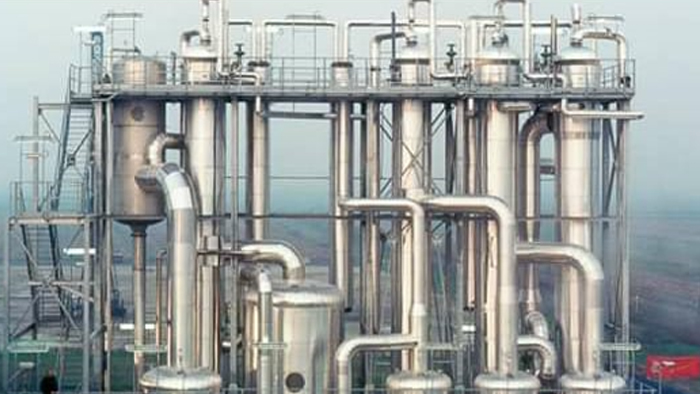
Centrifuges are commonly used to separate biomass from fermentation broth — especially in high-cell-density processes. For finer separation and product concentration, membrane filtration systems (microfiltration, ultrafiltration) allow selective separation of cells, proteins and smaller molecules. For further concentration or drying, evaporators and drying systems can be incorporated.
Utilities & Air Handling
A stable and sterile operating environment is essential. Compressed air is generated using an oil-free compressor, then cooled, dried and filtered to remove moisture, contaminants and microorganisms. The air passes through after-cooling, moisture separation, desiccant drying, activated carbon filtration and finally sterile filtration before entering the fermenter.
Additional utilities include cooling water, chilled water (if required) and steam for sterilisation — together ensuring temperature control, sterility and continuous operation.
Cleaning & Sterilisation (CIP / SIP)
Plants are equipped with automated cleaning and sterilisation systems. The Clean-in-Place (CIP) system circulates cleaning solutions — water, caustic, acid — through tanks, piping and process equipment. This is followed by Steam-in-Place (SIP), where steam sterilises the system before the next production cycle. Integrated CIP/SIP improves operational efficiency, reduces downtime and maintains consistent process conditions across batches.
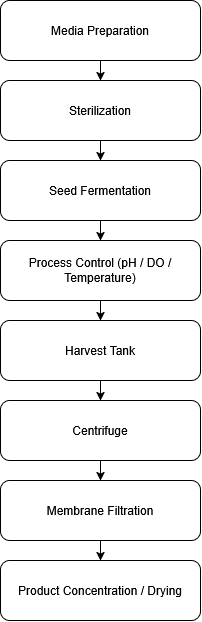
Typical Fermentation Process Flow
Project Gallery
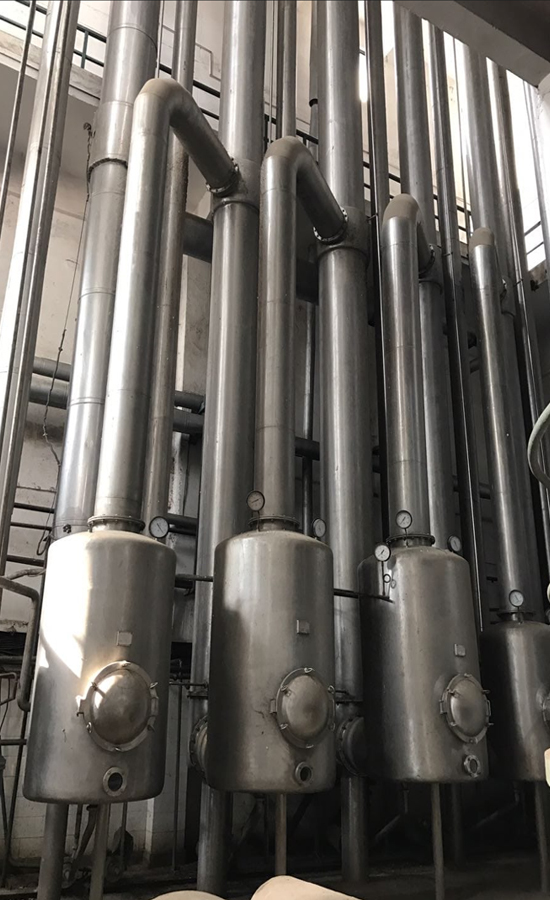
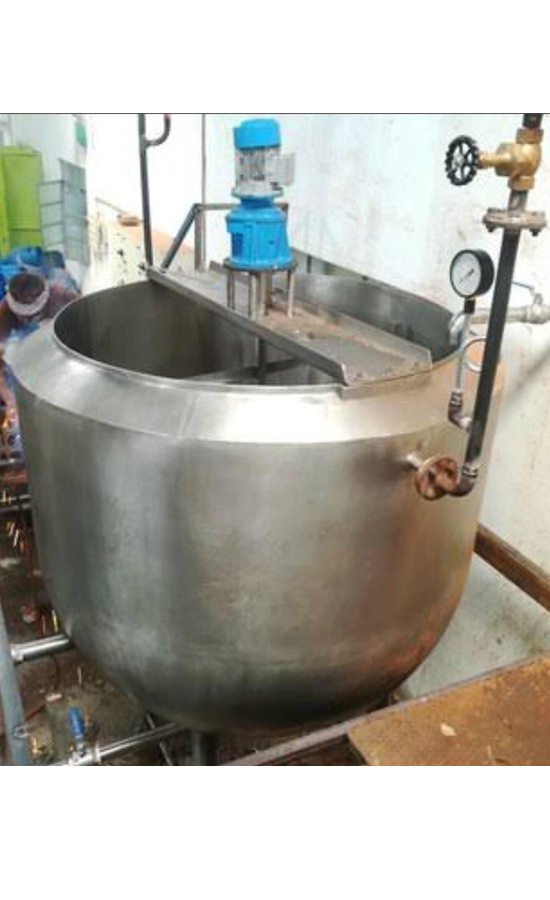
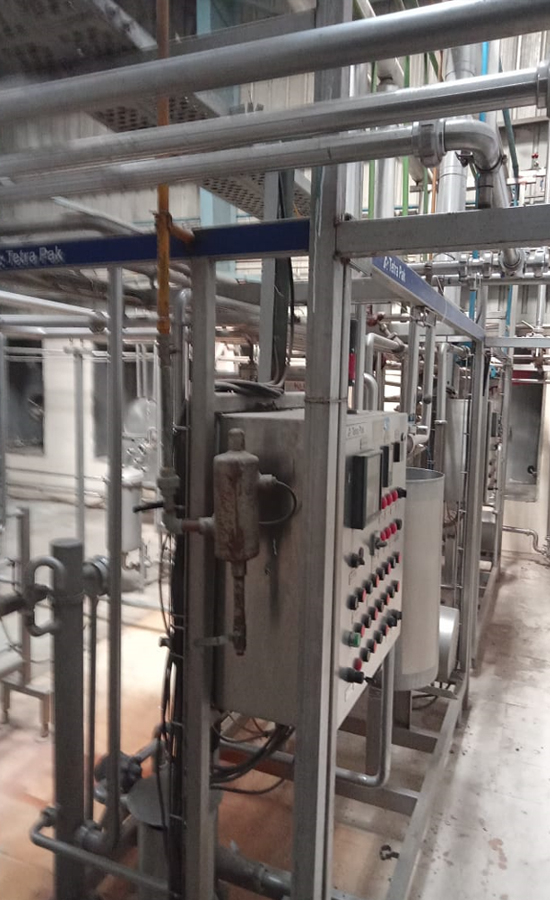
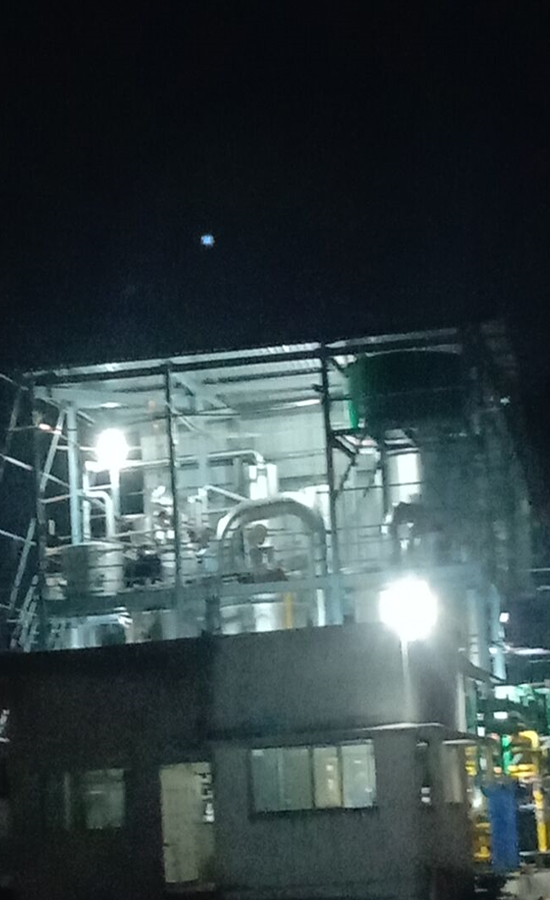
Ready to set up an industrial fermentation plant?
Share your product, batch size and process requirements — we'll help design a suitable fermentation plant configuration.